For all of the rightful criticism that Monti Ossenfort’s free agency strategy has received in recent times, he did pull off one major achievement in 2025. With the Arizona Cardinals in dire need of a top-line pass-rusher, he went out and got the best one available on the market when he signed Josh Sweat and did so without having to grossly overpay.
The move, so far, has been a certified success. In his first season with the Cardinals, Sweat led the team in sacks, tackles for loss and overall pressures. His 12 sacks tied him with Will Anderson Jr. and Byron Young as the eighth highest in the entire NFLand he had more TFLs (13) than Chris Jones, Jadeveon Clowney, Josh Hines-Allen, Micah Parsons and Jared Verse.
Josh Sweat was positioned as the leading man of the Arizona defence last season and he delivered. However, his supporting cast on the edge left a lot to be desired. Zaven Collins, B.J. Ojulari, Baron Browning and Jordan Burch managed 5.5 sacks and 12 TFLs between them. They had less sacks as a collective than a 39-year-old Calais Campbell (6.5) and just one more pressure (29) than Sweat generated by himself. Heck, Walter Nolen managed nearly half of that quartet’s production (2 sacks, 5 TFLs) in just 6 games as a rookie dealing with multiple injuries.
Only two teams had less sacks in the NFL than the Arizona Cardinals in 2025 – the abject New York Jets and the injury-ravaged 49ers.
With Browning, Collins and Ojulari all entering the final year of their current contracts, the Cardinals will surely be thinking about reinvigorating and replenishing the position. Though the team does have other needs, some that are glaring, they are well positioned to address the position especially in the first two days of the Draft. Below are 12 potential additions the team could make to give Josh Sweat a productive running mate off the edge.
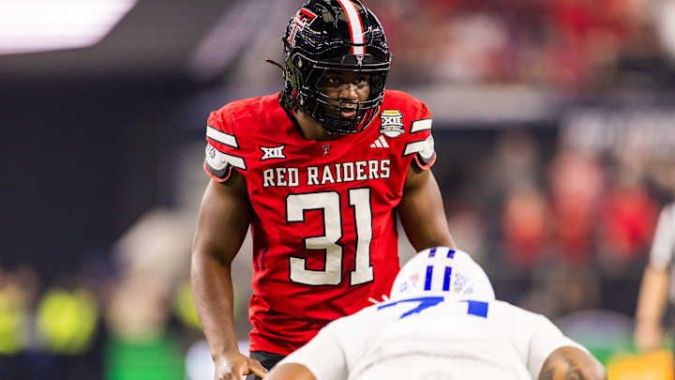
David Bailey – EDGE – Texas Tech – Sr. – 6’4″ – 251 lbs – 33 3/4″ arms – 10 1/4″ hands – 22 years old
The 2025 Texas Tech defence will have a number of its players selected in this draft and the leading man amongst them will no doubt be David Bailey, the Big 12 Defensive Lineman of the Year.
A ferocious quarterback hunter who recorded 15 sacks during the Red Raiders march to the College Football Playoffs, Bailey possesses an uber-aggressive nature that feeds directly into his play. He takes it as a personal affront that tackles are trying to stop him from taking out the quarterback.
Bailey has an elite first step which he uses to get the jump on tackles, often finding himself making contact with or bypassing them completely before they’re fully set, which in turn can lead to him psyching tackles out and forcing them to overcommit. This leaves them wide open for Bailey to unleash his lethal spin or ghost moves.
In 2025, Bailey had a 21.8% pass-rush win rate and scores amongst the 98th percentile for the category when you factor in the past two seasons and earned a 93.8 pass-rush grade from PFF, with an increase to 94.4 when facing true pass sets. During the regular season, he was #1 in the country in total pressures (73).
His athleticism and frightening first step also mean that Bailey can make some good initial pop at contact as he transfers speed-to-power when rushing and is best highlighted when he closes in on a quarterback. Creating pressures and pass-rush win rate are all incredibly important but actually getting the sack is a separate trait altogether and it is one Bailey excelled at in 2025. His closing speed, desire and effort amalgamate to make him a heat-seeking missile whose destination is your quarterback.
The fact that he routinely makes contact with the quarterback is further underlined by his 10 career forced fumbles.
Although Bailey also saw a marked improvement in his run defence game this past season, with his PFF grade jumping from 59.3 in 2024 to 81.5 in 2025, whether he has the requisite strength to consistently set the edge at the NFL level remains to be seen. It certainly won’t come down to aggression or desire but he is going to come up against tackles who weigh 50-70 pounds more than him on a weekly basis.
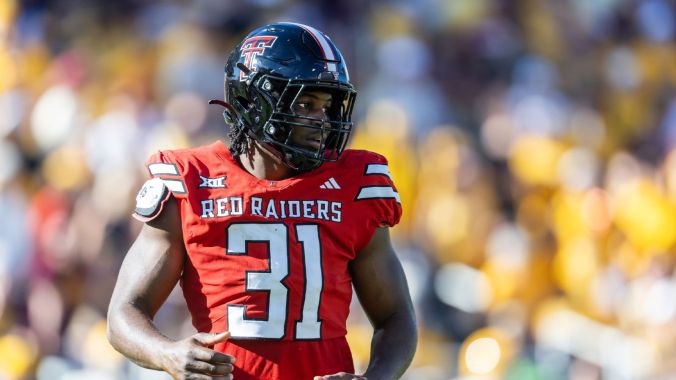
By now, it should be clear that the aggression Bailey has is a major factor in his evaluation. On one hand, that’s a major plus. Too many football players enter the NFL with the desired build, traits and natural talent but fail to live up to expectations because they are missing that mean streak. Think Major Chip Hazard and the Commando Elite before they are implanted with the GloboTech X1000 microprocessor chip in Small Soldiers. Bailey has that mean streak.
As with the movie and the microprocessor chip, that mean streak is only compatible for long-term success if it can be utilised in a controlled manner, rather than resulting in a technological meltdown and all-out war and that’s a line that Bailey hasn’t been able to find yet.
He was ejected in 2024 for stomping on an opposition player’s head in Stanford’s loss to NC State and was involved in a physical altercation with photographer Mark Rebilas after Arizona State had scored an upset win over Texas Tech in October leading to Rebilas filing a police report. That has been an immediate turn-off in the past for this Cardinals regime.
How Monti Ossenfort and co. judge Bailey on a personal level over the coming weeks, with Bailey claiming his Combine meeting with the team went “great”, could be the most critical factor in what the team do with the #3 pick.
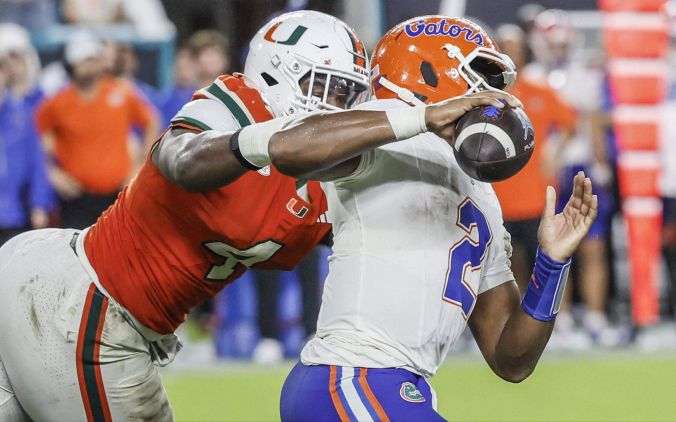
Rueben Bain Jr. – EDGE – Miami – Jr. – 6’2″ – 263 lbs – 30 7/8″ arms – 9 1/8″ hands – 21 years old
Purely from his on-field performances, there’s a hell of a lot to like about Rueben Bain Jr. He dominates with power which is the most transferable skill for success in the NFL as an EDGE defender.
Often called a “complete monster” by Mario Cristobal, Bain plays with violent, educated hands, with an expert understanding of a swipe move that disarms opponents standing out in particular. He is also able to generate speed to power in devastating fashion to leave opposing linemen shell-shocked.
Bain displays a great understanding of leverage and makes it his mission to get into the chest of offensive linemen to give himself the best chance of dictating the action. The 21-year-old is a high-motor player who never takes a snap off, instead bringing a “dawg” mentality to the defence, and takes on challenging assignments with extra zeal.
Even as a heavier-set EDGE, Bain has good speed and bend for his size, which he uses to turn tight corners and flatten out on his route to the quarterback.
In his final season at Miami, he generated 83 total pressures, 12 sacks and 3 QB hits as a pass rusher through the regular and postseason while his 91.8 PFF pass-rush grade ranked 12th amongst 852 qualified edge defenders. Bain had an eye-watering 23.5% pass-rush win rate for the year and had a 92.4 grade against true pass rush sets.
Bain isn’t simply a pass-rush guy either. He thrives in contact which makes him an incredibly strong run defender as he is able to overpower tackles to collapse running lanes. Combining his quality hands and understanding of the leverage battle also make him an expert in stacking and shedding blocks, and he can intelligently diagnose run plays to give him the best chance of meeting the runner head on.
Against the run, he recorded 36 solo tackles and his run-defense grade of 87.5 ranked 9th at the position.
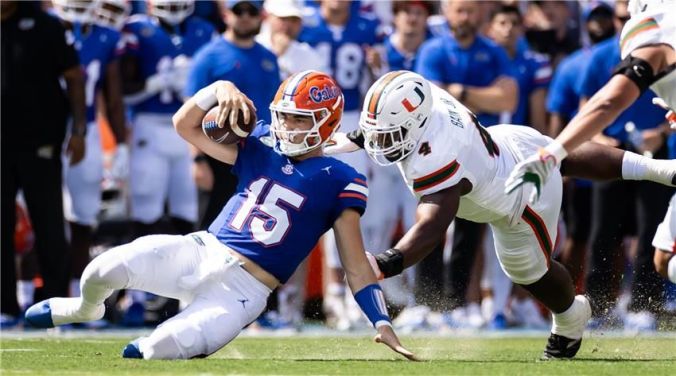
2025 was far and away the most successful of Bain’s career as the premier piece in the Miami defence that helped the Hurricanes to reach the CFP National Championship Game. The true junior received a deluge of awards in the wake of his stellar campaign being named as ACC Defensive Player of the Year, consensus NCAA All-America First-Team and All-ACC First-Team. He also joined the likes of Bradley Chubb, Jonathan Allen, Chase Young, Aidan Hutchinson and Laiatu Latu as a recipient of the Ted Hendricks Award as the top defensive end in college football.
He earned plaudits from coaches and teammates alike, with Cristobal noting that Bain had become a “front and center leader” for the team.
The main concerns for Bain when becoming a pro, especially given that he is expected to be a top-10 pick at minimum, are his physical measurements (if we give full credence to his Combine measurements). His arm measurements of 30 7/8″ put him in the 1st percentile of edge rushers since 2010 while his 77 1/2″ wingspan and 9 1/8″ hands sit in the 10th and 9th percentile respectively.
This has led to some discussion about his fit within NFL schemes as his lack of size in those integral areas might be better compensated for as an interior defender, a move which would lessen some of his most important skills. His short arms do show up when tackling with an 18.6% missed tackle rate as runners can evade his grasps and he isn’t always able to effectively wrap up even when he makes contact.
Many analysts have been quick to dismiss those fears because Bain overcomes them in college. His lack of length has not been a problem for him and in fact, his low center of gravity and being unable to rely on long levers has likely made him a far more refined pass-rusher in the long run. I do share some of those sentiments but Bain still represents a level of risk at the top end of the board because you’re asking him to overcome those stumbling blocks at a higher level. Transferring those skills from college and dominating despite those physical boosts against the biggest and the best players on the planet is not straightforward.
If anyone can do it though, it’s Rueben Bain Jr.
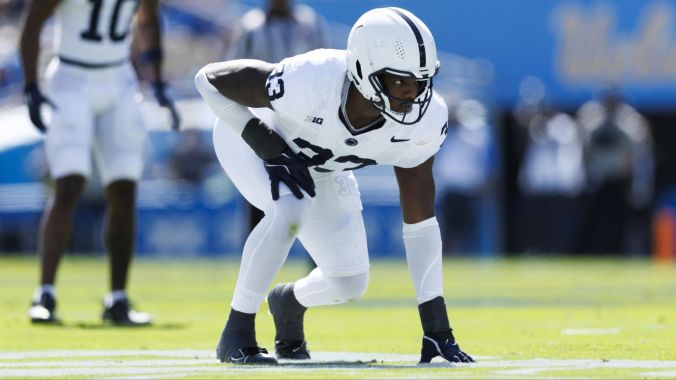
Dani Dennis-Sutton – EDGE – Penn State – Sr. – 6’5″ – 265 lbs – 33 1/2″ arms – 10 1/8″ hands – 22 years old
Penn State’s football program has produced an elite athlete? NOT ANOTHER ONE?!
Dani Dennis-Sutton produced a scintillating Combine performance that led to a 9.98 RAS which ranks as 6 out of 2085 eligible defensive ends from 1987 to 2026. He led the competing edges in the broad jump (10′ 11″) and 3-cone drill (6.90 seconds), came fourth in the vertical jump (39.50″) and sixth in the 40 (4.63 seconds).
Most importantly, Dennis-Sutton’s elite athleticism shows up in his on-field play. He uses his natural explosiveness to generate speed to power at the contact point, overpowers linemen in the run game and possesses the cardio to remain on the field and effective throughout the game.
Due to his athletic ability, Dennis-Sutton is easily the most adept and comfortable edge rusher in this class when asked to drop into coverage, something we know Nick Rallis asks his EDGE defenders to do at times. DDS has two career interceptions.
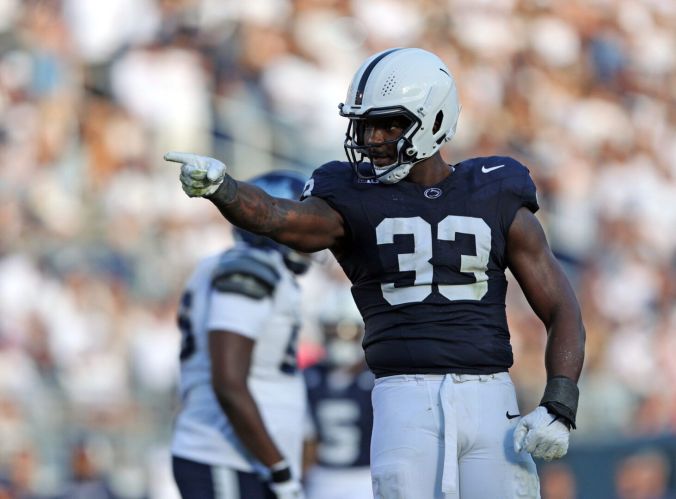
With 22 sacks over the past three seasons, the 22-year-old has shown improvement year on year as a pass-rusher, becoming more composed and intelligent with his hand usage and widening his pass-rush plan. As a two-year starter for Penn State, Dennis-Sutton has gained high-level experience as a Nittany Lion.
However, Dennis-Sutton is still developing that pass-rush plan and the team that takes him in the draft will be banking on him being able to maintain his rate of progression. Too often, when linemen counter his first move, Dennis-Sutton stalls out or is straight up beaten and he doesn’t have the elite level of bend or flexibility to fall back on in the way other athletic defenders can.
As a run defender, DDS is strong at the point of contact and can set the edge well but he does get overeager when pursuing the ball carrier which can lead to missed tackles when runners can bait him into prematurely launching into a tackle or when they force him to redirect. In 2025, he posted a missed tackle rate of 22.9%.
Dennis-Sutton could represent a good value pick-up as long as his development continues in the right direction.
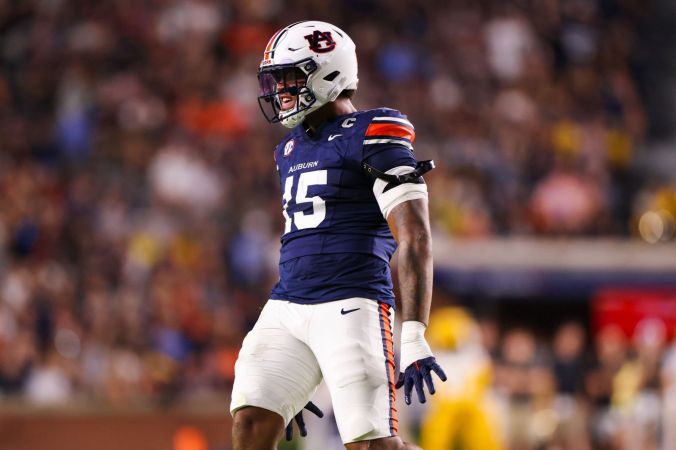
Keldric Faulk – EDGE – Auburn – Jr. – 6’6″ – 276 lbs – 34 3/8″ arms – 9 7/8″ hands – 20 years old
If you want to know why Keldric Faulk is an exciting prospect, just look at the goddamn SIIIIIIIIZE of him. 20-year-olds shouldn’t be that big. He’s bigger than the majority of fully grown men on the planet and he can’t even legally buy a beer yet, although I doubt he has to worry about being ID’d. There isn’t an ounce of fat on his frame, either.
Faulk is fully aware of his size and how to use it on the football field. He has immense power which means he is already a fantastic run defender. He utilises his strength to blow up blocks and fully extends to create separation. His stack and shed ability in the run game is one of the best in the class due to his combination of strength and understanding of his body. He is also a very disciplined tackler, using his long arms to great effect, while also showing a good deal of composure with a career missed tackle rate of 8.5%.
Even as one of the younger prospects in the class, Faulk has been commended for his leadership qualities and maturity. He reportedly donated some of his NIL money to help pay a walk-on teammate’s tuition fees.
The way Faulk utilises his arms also has an effect on the opposing quarterback. There were a number of moments on tape where quarterbacks were noticeably forced to make a snap-second decision between throwing to their preferred target or changing course last minute because Faulk was waiting like the Watcher in the Water with his long tentacles to bat the ball down.
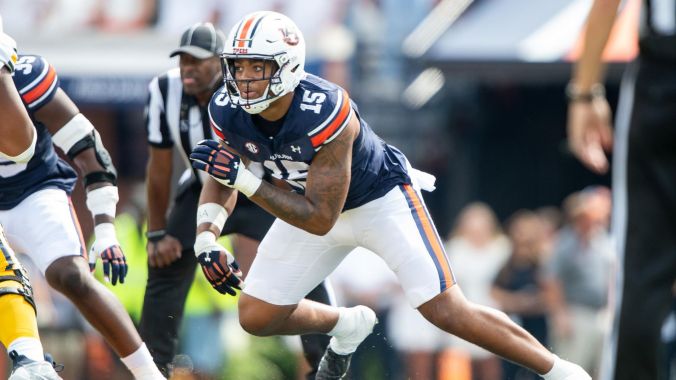
Where Faulk currently struggles is in the money making art of rushing the passer. Though he possesses an awesome bull rush, that’s about it in terms of consistently effective moves. There isn’t much of a plan beyond that and his upright play style bleeds into that, making him a vulnerable target for linemen to manipulate even when they are giving up the power advantage. He isn’t twitchy enough to blow by linemen either.
Despite being a three-year starter for Auburn, Faulk’s ability to string together a combination of moves is basic at best and there is a lack of intensity to force the issue when he is being stood up. He wasn’t Auburn’s leader in sacks or tackles for loss in any of his three seasons on the team and his production took a nosedive in 2025 with just 2 sacks compared to 9 the year prior.
To be fair to Faulk, he has had to deal with more than his fair share of chips and double teams and he did start to incorporate some swats and swim moves this year more often against solo blockers.
While not an obvious scheme fit for the Cardinals as an OLB, Faulk could be utilised in Nick Rallis’ odd front either side of the nose with Walter Nolen. There is a risk that Faulk never progresses into an effective pass rusher yet his ability in the run game means he will get instant reps as a pro.
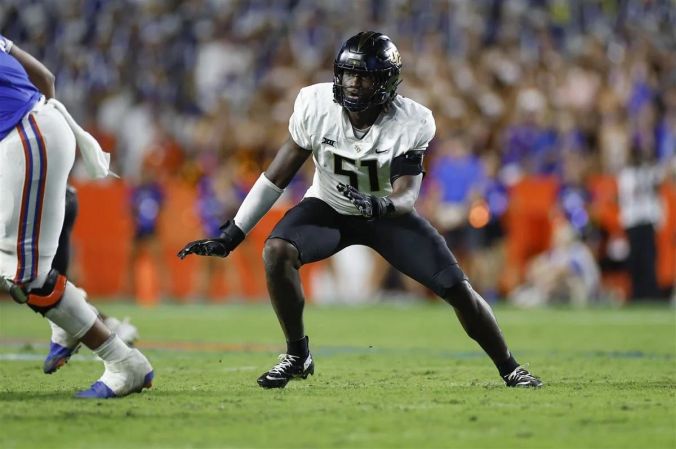
Malachi Lawrence – EDGE – UCF – RS Sr. – 6’4″ – 253 lbs – 33 5/8″ arms – 9 1/4″ hands – 23 years old
An older prospect, Malachi Lawrence was a two-year starter in Alex Grinch’s multiple front system at UCF where he finished in the top 10 for all-time sacks in school history. A broad shouldered, long-armed player, Lawrence developed into an effective pass rusher in college and has some of the required tools to be a successful rusher at the next level.
Though he does often use long-arm moves as his first port of call, he isn’t overly reliant on them when rushing the passer, instead complementing them with swim and club moves to sidestep and wrong-foot offensive linemen. A violent hitter, Lawrence makes noticeable and often rep-defining contact as he thuds into linemen and doesn’t give up when his initial moves are countered. He’s got a nasty streak when it comes to hitting the quarterback – they know they’ve been in a game after being hit by Lawrence.
In contrast to his build (he played closer to 260 than his Combine weight), Lawrence has impressive lateral quickness which he uses to his advantage when making moves across a blocker’s face and opening up gaps in the offensive line which he can then burst through. That explosiveness means that he can snap out of his stance and initiate contact quickly to take charge of the play.
His lateral quickness also show up in the open field when pursuing the ball carrier and trying to contain running plays.
2025 was Lawrence’s most notable campaign for UCF, recording career-highs in TFLs (11), tackles (28) and forced fumbles (2) and tying his career-highs in solo stops (17) and pass breakups (3) as he was named All-Big 12 First-Team in postseason honours. He posted a 19.2% pass-rush win rate, an 89.5 PFF pass-rush grade and a 91.6 grade against true pass sets.
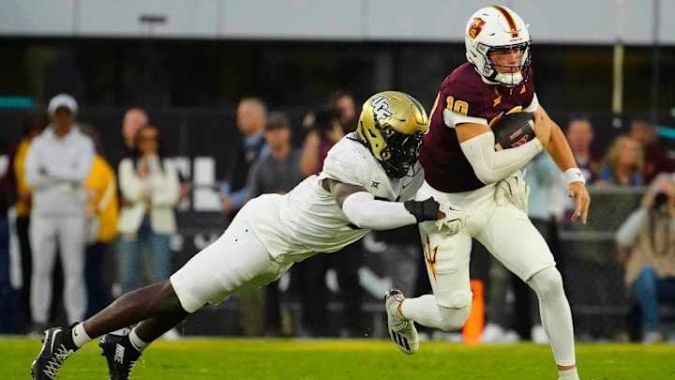
Despite being an aggressive player on the field, Lawrence is reportedly an easy-going character off it and even as an older player, he has less tread on the tires than others because UCF heavily rotate their defensive fronts – Lawrence averaged less than 40 defensive snaps per game in 2025. However, he has had surgery on both shoulders.
He does suffer from inconsistencies in both the run game and as a pass rusher. His pad level is repeatedly too high and he can be guilty of getting stuck at the top of his rush because he willingly gives himself over to tackles, especially against bigger, stronger competition. While violent in his play style, Lawrence isn’t an overwhelming powerhouse which again becomes more of a problem as he faces off against bigger, stronger competition.
His aggressiveness also comes back to bite him on the arse in run defence. His 23.3% missed tackle rate in 2025 was an IMPROVEMENT on his 30% MTR in 2024. Talk about a low bar to clear. He is like an eager puppy overrunning a ball.
Lawrence might not have the highest ceiling within the class but his current skillset will give him the ability to carve out a starting role and he would likely be the Cardinals’ second most effective pass rusher off the edge in short fashion.
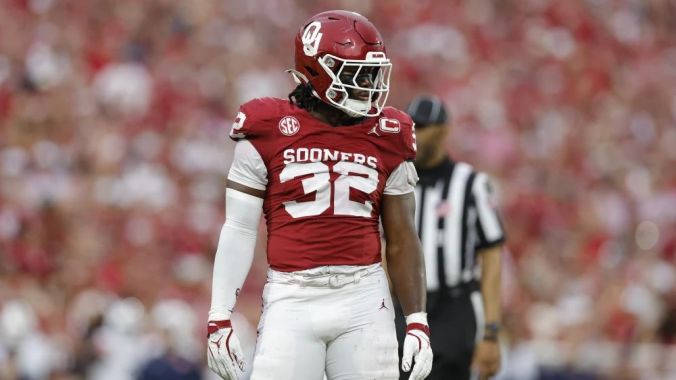
R Mason Thomas – EDGE – Oklahoma – Sr. – 6’2″ – 241 lbs – 31 5/8″ arms – 8 7/8″ hands – 21 years old
My favourite R Mason Thomas play that I’ve watched while diving into this EDGE class wasn’t one of the 15 sacks he’s managed over the past two years or a quick first-step explosion that forced a pressure nor was it the pop of surprising speed to power he can create that belies his undersized frame.
No, my favourite R Mason Thomas play was his 71-yard fumble recovery touchdown against Tennessee that best defines his character and shows why despite being an undersized player for the position he could succeed at the NFL level. With a Tennessee lineman hanging on for dear life to one arm and the ball in the other, for over twenty yards Thomas grinds his legs into overdrive and pulls his opponent along for the ride before finally ejecting him as he then makes for the endzone. The fact that Thomas makes the last 20-25 yards of the return touchdown suffering from the effects of a pulled quad further highlight his dogged determination.
Make no mistake, R Mason Thomas is constantly punching upwards when it comes to facing off against offensive linemen but that’s a challenge he takes on wholeheartedly. He produces better point-of-attack strength as a run defender than most other 250-pounders (which will be his playing weight) thanks to his well-built upper body and forklifts blockers with speed to power leverage. He’s always working to disengage from blocks and to find his way around tackles.
As a smaller EDGE defender, Thomas has the requisite athletic ability that you’d expect. He is quick out of his stance and can exploit even the smallest of corners offered to him by tackles. He has a natural flexibility and bend which allows him to get underneath blockers, turn the corner and flatten out before kicking into second gear to close on the quarterback. He used those talents to record a 20.3% pass rush win rate in 2025.
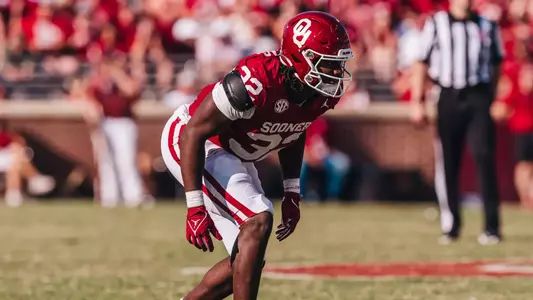
The physical limitations are real though and he will likely be strictly a designated pass-rusher in the NFL. He isn’t going to be able to compete against tackle/tight end double-teams, his average arm length gives him no margin for error when tackling (17.4% MTR in 2025) and his lack of length also shows up when he’s asked to contain.
Some of that Scrappy-Doo desire to overcome his size has a negative knock-on effect on his game. He’s prone to jumping offside (3 flags in 2025) as he knows he has to rely on being the first off the mark and he can be guilty of exposing running lanes because of his eagerness to attack.
He may not fit the overall bill as the #2 rusher across from Josh Sweat, R Mason Thomas could be a long-term replacement for either Browning or Ojulari.
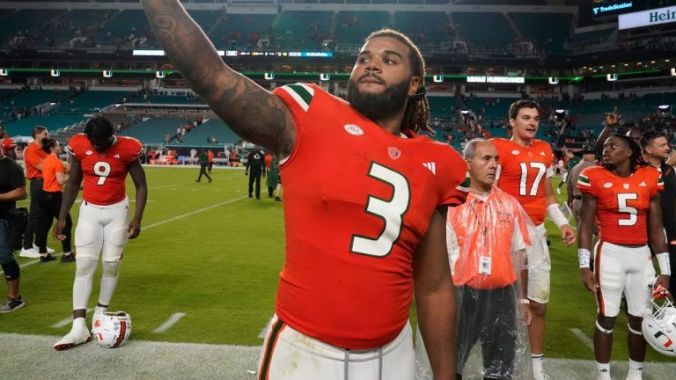
Akheem Mesidor – EDGE – Miami – Sixth-Year Graduate – 6’3″ – 259 lbs – 32 1/8″ arms – 10″ hands – 25 years old
As the saying “If you’re old enough, you’re good enough” goes, Akheem Mesidor was old enough and certainly good enough for the Miami Hurricanes in 2025.
Enjoying a breakout year as the ‘Canes made it all the way to the CFP National Championship Game, Mesidor led the team in sacks (12.5) and tackles for loss (17.5), as he was named to All-ACC First-Team and selected as one of the five finalists for the Ted Hendricks Award.
Mesidor has an array of pass-rush moves in his arsenal that he can call upon. He has big, well-timed and violent hands that are best displayed when he uses cross-chops and clubs to bat aside the unwanted hands of offensive linemen and an explosive lower-half to burst through any gaps he is offered or can create himself. Mesidor is adept at splitting the lineman’s hands and exposing their chest and he also thrives when can get his large mitts onto a blocker to snatch and pull them off balance to make plays against the run.
Having undergone several body transformations in his time at college – he entered the system as a sub-200 pound tight end, has played at defensive tackle for both Miami and West Virginia and then as a true EDGE – Mesidor has a steely commitment to making the most of his time on the football field and plays with a huge amount of fire in his belly. He bursts out of his stance to beat blockers to the corner and win at the top of his rush.
Having played for so long at the college level and having been deployed in multiple positions, Mesidor has developed a high football IQ and can recognise and ruin screen plays.
The obvious detraction surrounding Mesidor is his age. He has already turned 25 prior to the draft and if he earns a second contract with a team, he will likely be 30 when he signs it. There are lots of people who simply do not care about that and want their team to draft a good football player, which Mesidor is.
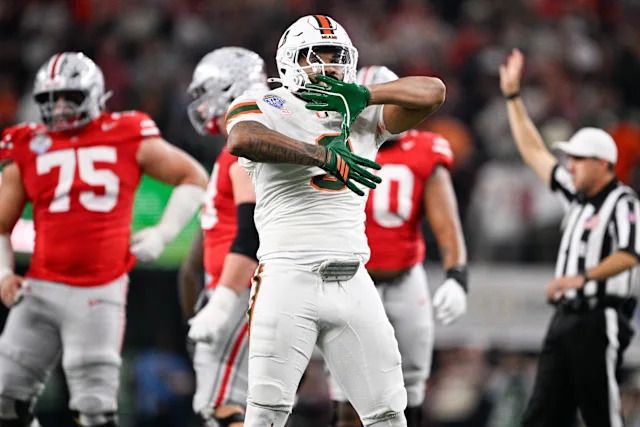
Some of my personal concern about his lengthy college career isn’t *really* about his age. 2025 was by far and away Mesidor’s best season. He was productive in 2022 (10.5 TFLs, 7 sacks) but multiple injuries have hampered his time in college (including significant injuries to both feet). I’m wary of putting too much stock into someone whose only elite season has come when he has been a man amongst young guys AND benefitting from playing across from Rueben Bain Jr., with that injury history.
There are times when I feel like Mesidor wins simply by being a fully maxed out grown man playing against a younger, developing talent and he won’t be able to do that in the NFL. He has all of the tricks in the book at his disposal, but he will be asked to face players next season who have read that particular book back-to-front.
Admittedly, that may be confirmation bias on my part due to his age.
His play strength is adequate, especially against the run, rather than being a noticeable positive and his urgency can lead to negligence as a tackler (20% MTR in 2025). Rather than tracking a player until the last second, he launches into contact.
Akheem Mesidor would be an instant impact player for the Cardinals but it will be up to Monti Ossenfort and the staff to decide whether he would offer enough return on investment to be worthy of a premium pick.
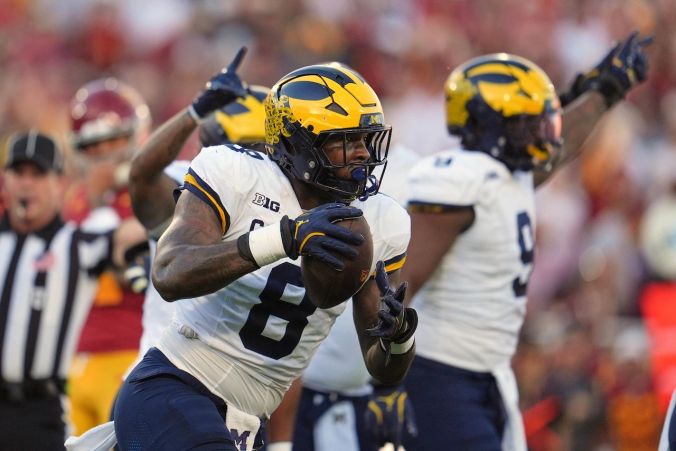
Derrick Moore – EDGE – Michigan – Sr. – 6’4″ – 255 lbs – 33 3/8″ arms – 9 1/8″ hands – 23 years old
A former four-star recruit, Derrick Moore slowly knitted things together over the course of his college career to be Michigan’s most important defensive player in 2025. Voted as a team captain by his teammates at the start of the year, Moore would go on to earn both the team’s Defensive Player of the Year and the Bo Schembechler Most Valuable Player Award after a season where he recorded 11 sacks and a team-leading 10.5 tackles for loss. His 21 career sacks ranks as eighth most in school history.
Though Wink Martindale frequently rotated his defensive front this year (Moore averaged 36.7 defensive snaps per game), Moore was one of the most efficient rushers in the FBS, generating a pressure on 17.5% of his pass-rush snaps (#1 Big 12, #17 in FBS).
With a combination of athleticism and physicality, Moore can win by going around or through tackles. Though his obliteration of Markel Bell during 1-on-1 drills at the Senior Bowl isn’t something he replicates like-for-like on tape, he is able to motor through the chest of blockers and has some good pop in his hands when making contact. Quick off the ball, Moore can also use his bend to get round the corner and flatten out to home in on the quarterback. That blend of traits can cause linemen to get confused, caught in two minds on how to approach the snap and end up overextending themselves, something Moore exploits even further with a flurry of feints.
The 23-year-old understands how to get the most out of his broad frame in the run game as a physical edge setter and he’s an incredibly effective tackler (10.3% MTR in 2025).
With big school experience and steadily improving production, you would expect Moore to be considered as a top pick for teams. However there are a number of concerns that will knock him down a peg or two.
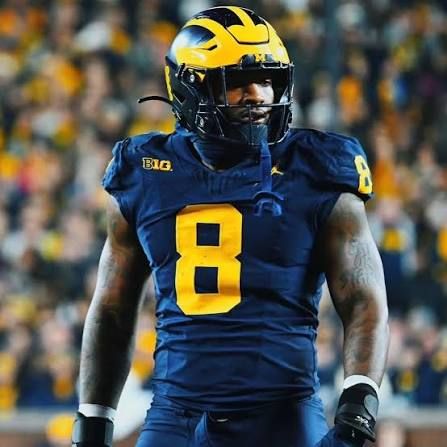
As a pass-rusher, he is guilty of relying too heavily on his physical attributes and he doesn’t have an extensive pass-rush plan. He doesn’t effectively string moves together which can end up with him floundering in the arms of his opposing number. This is exacerbated by an inconsistent pad level. In the run game he doesn’t consistently get off blocks and his play recognition isn’t where it should be as a four-year player at Michigan.
Moore is a high-floor player with the traits that could be moulded further at the NFL level. His constant progression points to someone who is coachable and isn’t the final product yet. He could be a steady, low-risk option for the Cardinals.
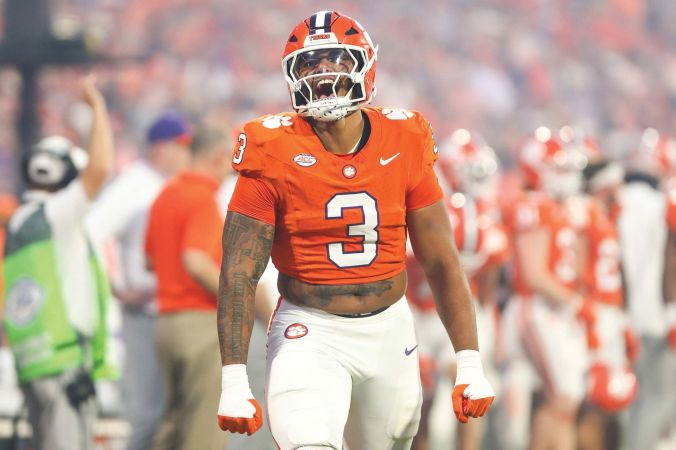
T.J. Parker – EDGE – Clemson – Jr. – 6’4″ – 263 lbs – 33 1/8″ arms – 9 1/2″ hands – 21 years old
This time last year, much like a host of his Clemson teammates, T.J. Parker was being pegged as a nailed on, first-round talent for the 2026 draft. For those of us pinning our hopes and dreams on the 2027 draft/quarterback class, the Clemson Tigers in 2025 should be a warning sign. Don’t count your chickens before they hatch.
In 2024, Parker’s 11 sacks and 19.5 tackles for loss were the most by a Clemson player since Clelin Ferrell’s 19.5 TFLs and 11.5 sacks in 2018, broke a school record for forced fumbles in a season (6) and his sack total ranked as the 9th most by a Clemson player in a single season in school history. That record breaking number of forced fumbles was the second most in the nation that season with his TFL and sack total ranking fifth and ninth nationally respectively.
In 2025, Parker’s TFL and sack total were cut by over half (9.5 and 5) and he didn’t record one forced fumble. 3 of those 5 sacks came against a South Carolina offensive line that was an uncompetitive mess by the time they played Clemson.
Parker’s talent didn’t magically evaporate overnight and he showed that during Senior Bowl practices where he was much closer to his potential than at points during the season.
A powerful, destructive rusher, T.J. Parker opens nearly all of his rushes with a long-arm move that he extends expertly to knock blockers off balance. He wields his hands like he has sledgehammers attached to them like a One Piece character, caving in chests and swiping away reaching hands. He is able to generate devastating speed to power that can dent a pocket like a battering ram and when the damage is done, he plays with an urgency that guarantees he’ll be around the ball at the end of the play.
Parker’s main issue, and it’s what led to his plummeting production in 2025, is that Plan A was so routinely effective in his sophomore year that there is no Plan B yet. We’ve seen the Mike Tyson comparison levied at Rueben Bain but I think the boxing metaphors suit Parker just as well.
He is like a young, up and coming heavyweight who has been knocking people out left, right and centre and now people have tape on him. They know what to expect, they’re turning the heat up on him, they’re coming to fight rather than roll over and it’s time for Parker to start learning how to feint, how to set up his punches and how to break people down.
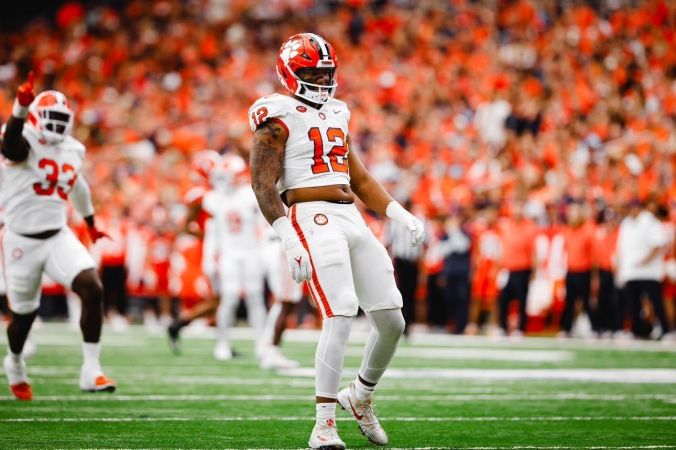
To succeed at the next level, he’s going to have to develop a wider pass-rush plan and learn how to string his moves together. He will still win with power at the NFL level but not against the big boys. The most powerful college tackles were able to stall him and swallow him up last season, so top-end NFL powerhouses will be able to do the same. He doesn’t have the flexibility to go around people so he will have to go through people’s chests, that’s not going to change, but he needs to add serious variety to his setup and approach to rushing.
At the moment, when he is countered and met head-on-head with strength, he is far too quick to lose his discipline and give up his balance as he tries to disengage from the block.
One area where Parker did improve this year is as a tackler, dropping his missed tackle rate from 17.6% down to 11.1%.
It’s easy for me to say from my comfy chair but Parker will likely benefit from leaving Clemson and making that step up to the pros simply because there seemed to be so much negativity around the team in 2025. Everyone on that team struggled. A change of scenery will probably do all of those young men good.
While he isn’t garnering the same buzz as twelve months ago, the overall production in his career (32.4 percent of all his career tackles were for a loss), the high-motor he plays with and the fact that he will be able to contribute on all three downs immediately make T.J. Parker a potential steal IF good coaching can help him to fine tune his overall pass-rush plan.
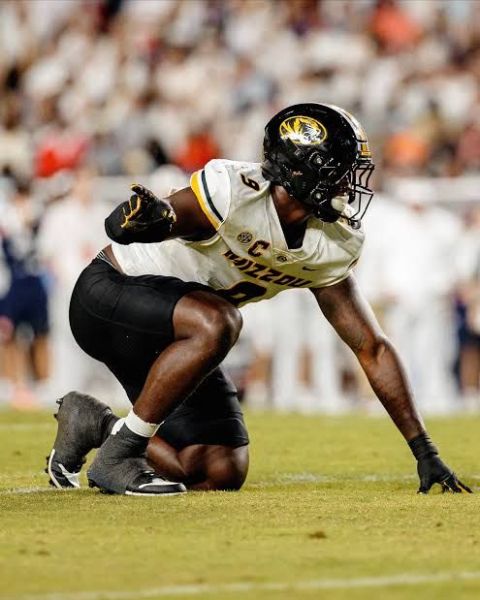
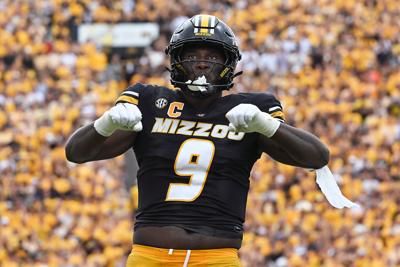
Zion Young – EDGE – Missouri – Sr. – 6’6″ – 262 lbs – 33″ arms – 9 1/2″ hands – 22 years old
I actually don’t think that there’s a scenario in which the Arizona Cardinals select Zion Young at any point in the draft but he’s a name that is going to be linked to the team on Day 2 if the team go for an offensive lineman or one of the exciting skill position players with their first-round pick.
You can see why, as a football player, Zion Young would attract people’s attention. Last season, he finished #2 in the SEC for TFLs (16.5) and #3 for pressures (53). He led the team in sacks (9) and was named Second-Team All-SEC by coaches.
Young can, at times, be an absolute game-wrecker who batters blockers with heavy hands and a push-pull technique that looks like he’s escorting a drunk out of the bar. He has a quality bull rush and understands when to use his heavy hands at the right time to knock away a blocker’s hands.
As a run defender, he fully extends himself to create leverage and to set a firm edge which he did excellently against Kadyn Proctor when Mizzou faced Alabama. His long strides allow him to eat up ground quickly and close in on the ball carrier. He posted an 86.6 PFF run grade in 2025.
Voted team captain by teammates for 2025, Young is said to be a vocal leader in the lockeroom and is reportedly an alpha dog in the weight room.
An incredibly competitive player, Young improved in each of his four seasons first with Michigan State before transferring to Missouri for his final two years and he performed well at the Senior Bowl. So he has the production, linear progression and on-field attitude that teams desire and he made a good impression at one of the standout events of the draft process.
So what is the issue that will likely put Zion Young off the Cardinals’ radar entirely?
It isn’t the fact that his pass-rush plan is still a work in progress because there are a number of EDGE defenders in exactly the same boat. It isn’t because he was used as a defensive end in an even front by defensive coordinator Corey Batoon because we’ve seen that Ossenfort will take a bit of a gamble with fits if the talent is there. It’s not because he will struggle to threaten the outside shoulder in the NFL due to having mediocre burst and some stiffness in his hips because you wouldn’t draft him to do those things.
I will eat my hat if the Arizona Cardinals draft Zion Young because he has had numerous, serious off-field issues and we’ve seen that this Cardinals regime doesn’t mess about with things like that. Young was one of seven Michigan State players suspended for the final four games of the 2022 season and charged with assault after a postgame altercation at Michigan. Young pleaded guilty to misdemeanour aggravated assault in August 2023 and received probation.
Given that happened in his freshman year, you could perhaps forgive Young for losing his head in an emotionally charged moment. We were all 18 once. However, in December 2025, Young was arrested and charged with suspicion of DWI, speeding and failing to properly affix a licence plate to his vehicle.
Yes, he’s still technically a young man, but to (potentially) be doing something like that when you’re a team leader and on the verge of starting the draft process, the most important job interview of your life? That’s not good enough.
Image Credits: Mark J Rebilas/ Imagn Images, John E. Moore III/Getty Images, USA Today Sports, Al Diaz, Michael Chang/Getty Images, Sooner Sports, AP Photo/Alonzo Adams, AP Photo/Wilfredo Lee, AP Photo/Mario Jose Sanchez, Dawson Powers, Lily Mantel
 Erimus Sports